سدیم مونوفلورو فسفات
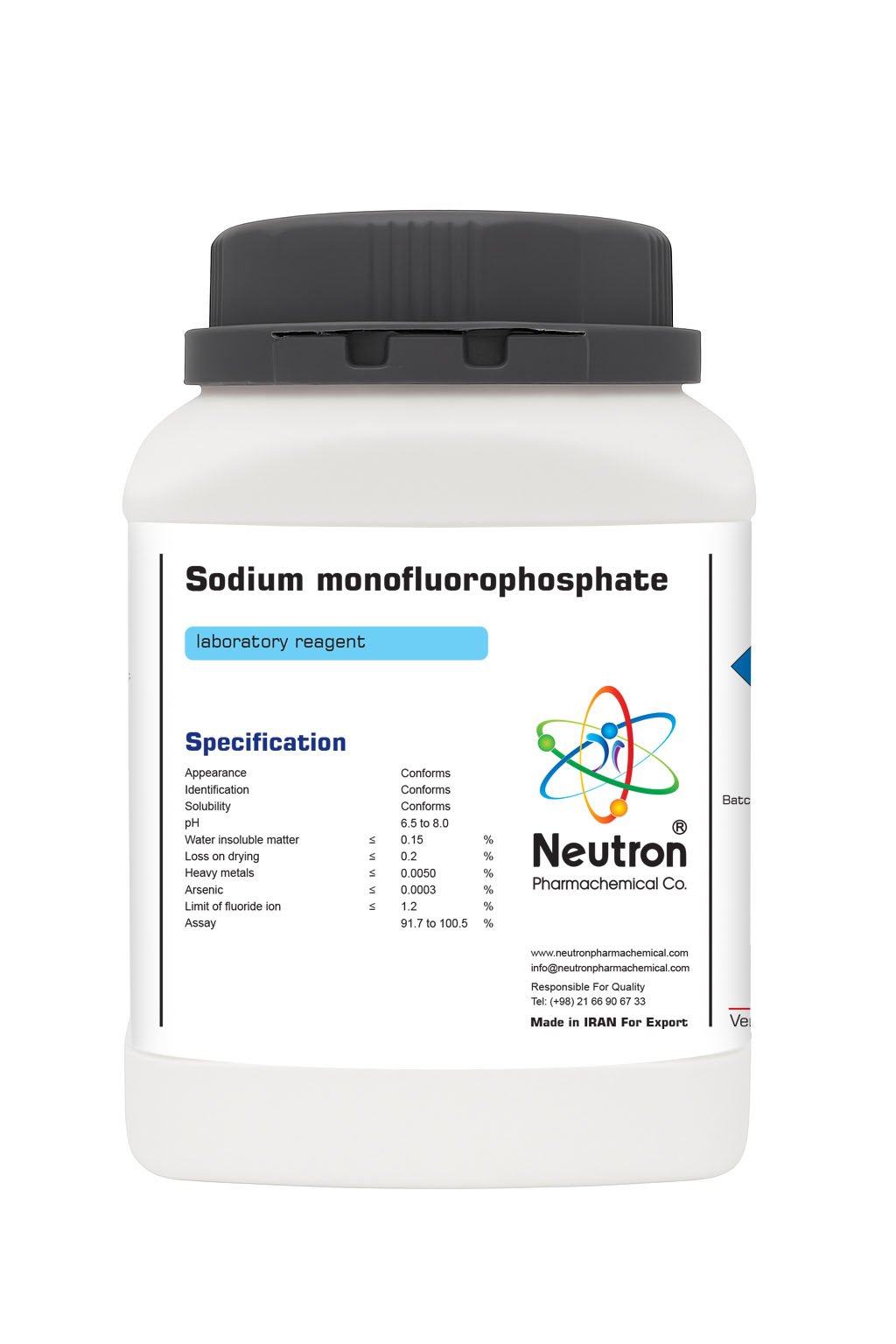
| Chemical formula: | Na2PFO3 |
| Molar mass | 143,95 g/mol |
| CAS number | 10163-15-2 |
| HS Code | 28352990 |
| Storage | Storage at 5 to 30 °C |
| SDS | available |
| Appearance | Conforms | ||
| Identification | Conforms | ||
| Solubility | Conforms | ||
| pH | 6.5 to 8.0 | ||
| Water insoluble matter | ≤ | 0.15 | % |
| Loss on drying | ≤ | 0.2 | % |
| Heavy metals | ≤ | 0.0050 | % |
| Arsenic | ≤ | 0.0003 | % |
| Limit of fluoride ion | ≤ | 1.2 | % |
| Assay | 91.7 to 100.5 | % |
Sodium Monofluorophosphate is an inorganic fluoride compound appearing as a white, odorless, crystalline powder. It is widely used in pharmaceutical and laboratory formulations for its anticariogenic, enamel-strengthening, and stabilizing properties.
🏭⚗️ Production
Sodium monofluorophosphate is produced by the reaction of sodium phosphate with hydrofluoric acid under controlled conditions. The resulting compound is highly pure, chemically stable, and suitable for pharmaceutical and laboratory applications.
🔬 Properties
Sodium monofluorophosphate is soluble in water, stable under normal storage conditions, and exhibits anticariogenic activity by providing fluoride ions to strengthen tooth enamel. It functions as a mild buffering agent and stabilizer in formulations, and is non-toxic at recommended concentrations.
🧪 Applications
In pharmaceutical formulations, Sodium Monofluorophosphate is primarily used in toothpaste and mouthwash products to prevent dental caries, remineralize enamel, and enhance oral hygiene. It also serves as a stabilizer and fluoride delivery agent in topical oral care formulations.
In laboratory settings, it is utilized as a fluoride source in experimental studies related to enamel protection, dental material testing, and drug delivery systems requiring controlled fluoride release.
⚠️ Safety
Sodium Monofluorophosphate is generally recognized as safe for use in oral care formulations at recommended concentrations. It is non-toxic, non-irritating, and hypoallergenic for most individuals. Excessive ingestion can lead to fluoride toxicity. Standard handling procedures, including proper storage and hygiene, should be followed to ensure safety during pharmaceutical or laboratory use.