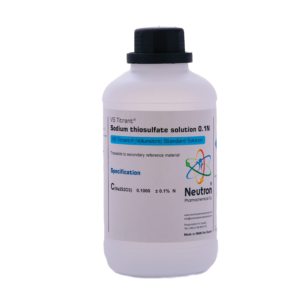
Potassium hydroxide solution 0.1 N in Methanol
| Density: | 0.8 g/cm3 (20 °C) |
| HS code: | 38220000 |
| Storage: | Store at +15 °C to +25 °C |
| SDS | available |
| R phrase: | R 11-23/24/25-36/38/23/24 |
| S phrase: | S 7-16-36-37-45 |
| Odour: | of methanol |
| Form: | liquid |
| Color: | colourless |
| Solubility in water: | (20 °C) soluble |
| Flash point: | ~7 °C |
| Explosion limit: | 5.5-31 Vol% |
| lgnition temperatute: | 455 °C |
| C(KOH) | 0.100 | ± 0.2% N | |
Potassium Hydroxide (KOH) Solution 0.1 N in Methanol is a standardized non-aqueous solution used in pharmaceutical and analytical laboratories for acid–base titrations, saponification tests, and determination of free fatty acids in water-sensitive compounds. Methanol serves as the solvent, enabling reactions with compounds that are unstable or insoluble in water.
🏭⚗️ Production
Prepared by dissolving high-purity potassium hydroxide pellets in anhydrous methanol under controlled conditions and diluted to the desired normality (0.1 N). The solution is standardized against a primary standard acid, such as benzoic acid or potassium hydrogen phthalate, for accurate concentration. Stored in tightly sealed, chemically resistant bottles to prevent moisture absorption and reaction with atmospheric CO₂.
🔬 Properties
A clear, colorless, strongly alkaline liquid, fully miscible with methanol. Highly hygroscopic and flammable due to the methanol content. Reacts vigorously with water or acids and must be protected from moisture and ignition sources.
🧪 Applications
Used for non-aqueous titrations in pharmaceutical quality control, ester saponification, and determination of acidity in alcohol-soluble compounds. Ideal for water-sensitive or alcohol-soluble analytes where accurate base concentration is critical.
⚠️ Safety
Corrosive, flammable, and toxic if ingested or inhaled. Can cause severe skin burns and eye damage. Handle with gloves, goggles, and lab coat in a fume hood. Keep away from heat, sparks, and open flames. Store in a cool, dry, tightly sealed container. Neutralize spills carefully and dispose of according to laboratory and environmental safety regulations.