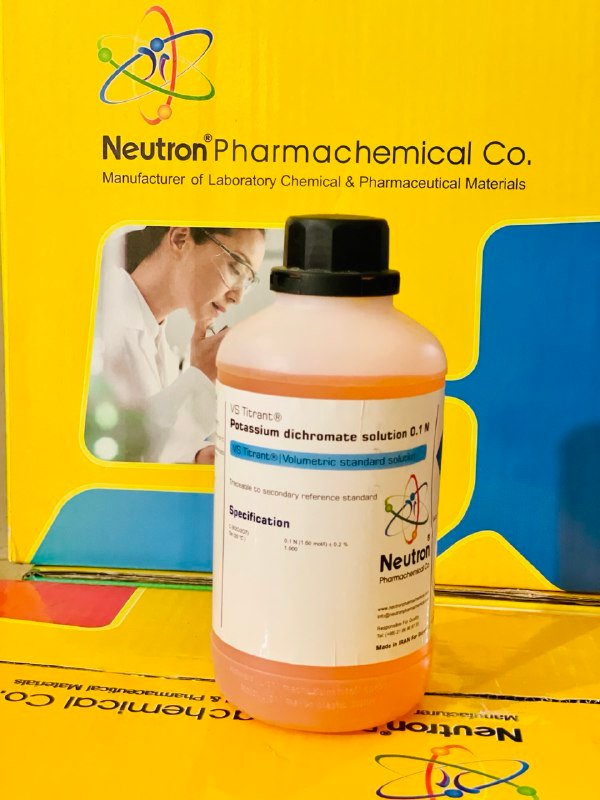
Potassium Dichromate Solution 0.1 N is a standardized aqueous solution of potassium dichromate (K₂Cr₂O₇) with a normality of 0.1 N, formulated for analytical, laboratory, and pharmaceutical applications where precise oxidizing capacity is required, particularly in redox titrations and assay procedures.
🏭⚗️ Production
Potassium Dichromate Solution 0.1 N is prepared by dissolving high-purity potassium dichromate in distilled or deionized water, followed by careful standardization using a primary reducing agent such as sodium thiosulphate to achieve the exact normality at 25°C. The solution is stored in tightly sealed, light-resistant containers to prevent reduction or decomposition and to maintain long-term stability.
🔬 Properties
The solution is a bright orange-red, clear liquid with strong oxidizing properties. It is highly soluble in water and remains stable under normal laboratory conditions if protected from light, organic contaminants, and reducing agents. Exposure to light or impurities can lead to gradual decomposition and loss of oxidizing strength.
🧪 Applications
Potassium Dichromate Solution 0.1 N is widely used in laboratory and pharmaceutical settings for redox titrations, determination of reducing substances, and standardization of sodium thiosulphate solutions. It is also employed in assay procedures, quality control of pharmaceutical formulations, and analytical methods requiring precise oxidative measurement.
⚠️ Safety
The solution is highly toxic, corrosive, and a strong oxidizing agent. Direct contact with skin, eyes, or mucous membranes can cause severe injury. Gloves, goggles, and lab coats should be worn during handling, and work should be conducted in a well-ventilated area. The solution must be stored away from organic materials, reducing agents, and heat sources. Disposal must comply with institutional safety protocols and environmental regulations due to the toxic and carcinogenic nature of chromium(VI) compounds.