Polyquaternium-10
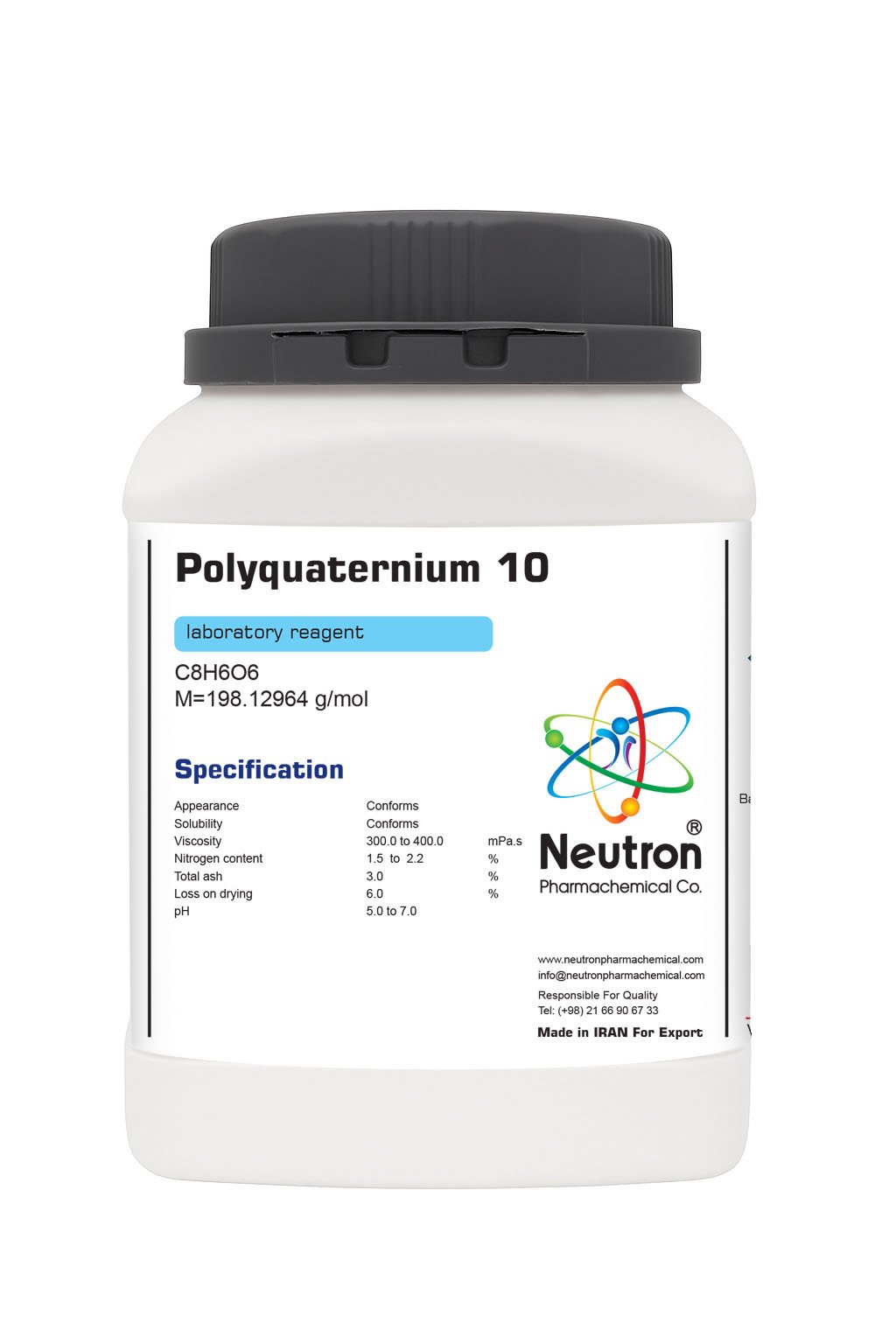
| Molecular Formula | C8H6O6 |
| Molecular Weigh | 198.12964 g/mol |
| CAS number | 68610-92-4 |
| HS Code | 39123919 |
| Storage | Storage at 5 to 30 ◦C |
| SDS | available |
| Appearance | Conforms | ||
| Solubility | Conforms | ||
| Viscosity | 300.0 to 400.0 | mPa.s | |
| Nitrogen content | 1.5 to 2.2 | % | |
| Total ash | 3.0 | % | |
| Loss on drying | 6.0 | % | |
| pH | 5.0 to 7.0 |
Polyquaternium-10 is a water-soluble cationic polymer derived from hydroxyethyl cellulose and quaternary ammonium compounds. It appears as a white to off-white powder or granular material, and is widely used in pharmaceutical and laboratory formulations for its conditioning, film-forming, and stabilizing properties.
🏭⚗️ Production
Polyquaternium-10 is produced by reacting hydroxyethyl cellulose with quaternary ammonium salts under controlled conditions. The resulting polymer is highly soluble in water and forms a stable, viscous solution suitable for various pharmaceutical and laboratory applications.
🔬 Properties
Polyquaternium-10 is soluble in water, chemically stable, and has a high cationic charge density. It functions as an effective film-former, moisturizer, and antistatic agent. Its cationic nature allows it to bind to negatively charged surfaces such as skin and hair, improving texture and providing a protective barrier.
🧪 Applications
In pharmaceutical formulations, Polyquaternium-10 is used in topical creams, lotions, gels, shampoos, and hair care products to provide conditioning, improve spreadability, and stabilize emulsions. It also enhances the delivery and retention of active pharmaceutical ingredients on skin or hair surfaces.
In laboratory settings, it is utilized as a stabilizer in experimental emulsions, as a conditioning agent in skin or hair models, and as a carrier or medium in drug delivery studies requiring polymeric interaction with surfaces.
⚠️ Safety
Polyquaternium-10 is generally recognized as safe for topical use in recommended concentrations. It is non-toxic, non-irritating, and hypoallergenic for most individuals. Standard handling procedures, including proper storage and hygiene, should be followed to ensure safety during pharmaceutical or laboratory use.