Cyclopentasiloxane dimethicone
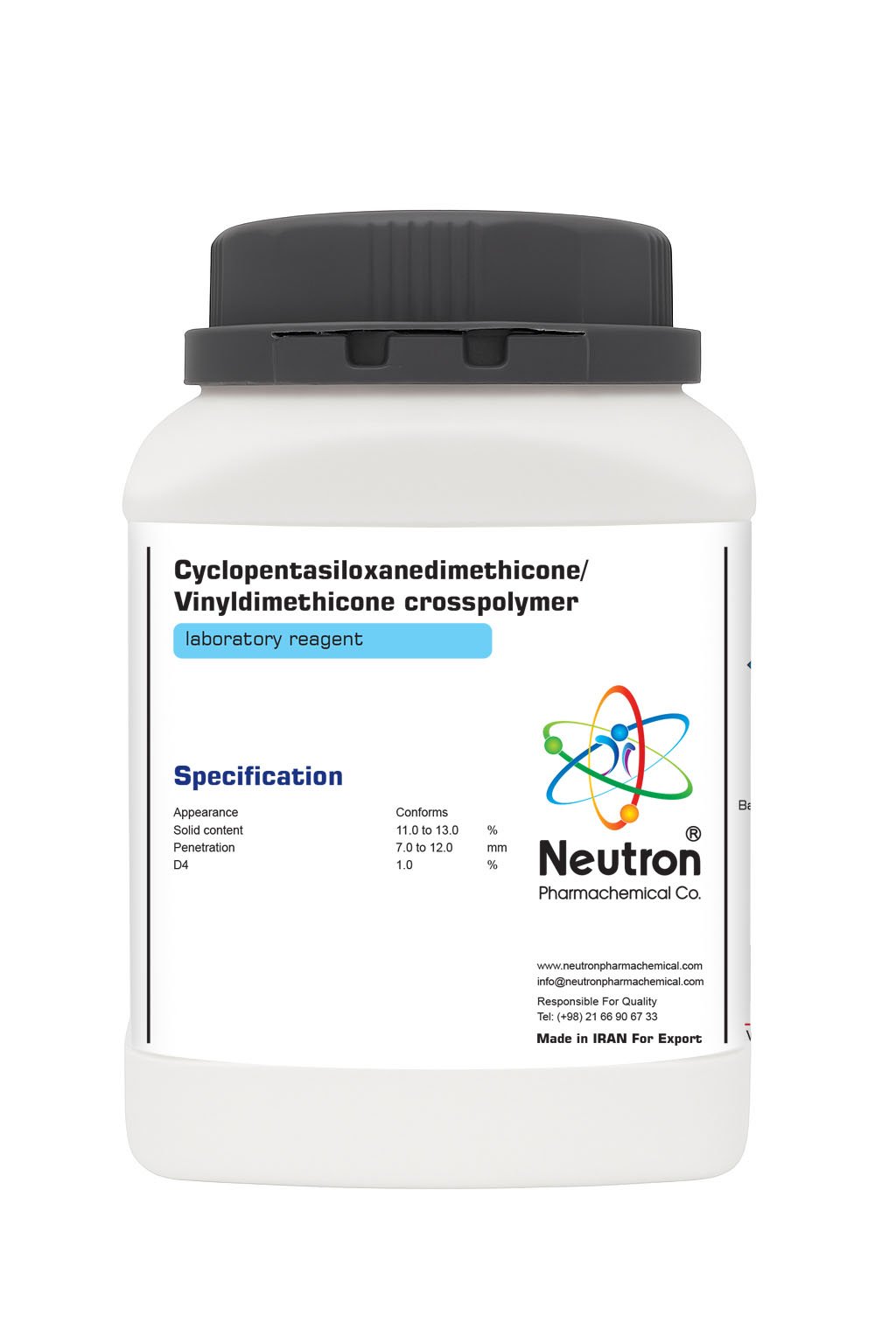
| CAS number | 541-02-6, 63148-62-9 |
| HS Code | 3824.99 |
| Storage | Storage at 5 to 30°C |
| SDS | available |
| Appearance | Conforms | ||
| Solid content | 11.0 to 13.0 | % | |
| Penetration | 7.0 to 12.0 | mm | |
| D4 | 1.0 | % |
Cyclopentasiloxane Dimethicone Blend (Dimethiconol) is a silicone-based compound combining volatile cyclopentasiloxane with high-viscosity dimethiconol. It appears as a clear, colorless to pale yellow, odorless or nearly odorless liquid and is widely used in pharmaceutical and laboratory formulations for its emulsifying, stabilizing, and skin-conditioning properties.
🏭⚗️ Production
Dimethiconol is synthesized by the polymerization of dimethicone, resulting in a high-viscosity silicone polymer. This blend is produced by combining cyclopentasiloxane with dimethiconol under controlled conditions, yielding a mixture that is liquid at room temperature, making it suitable for various pharmaceutical and laboratory applications.
🔬 Properties
Dimethiconol has a molecular weight ranging from 10,000 to 100,000 g/mol, depending on the polymerization degree. The blend is insoluble in water but soluble in organic solvents. It has a low volatility, providing prolonged skin conditioning effects. The substance exhibits excellent emulsifying and stabilizing properties, enhancing the delivery and efficacy of active pharmaceutical ingredients.
🧪 Applications
In pharmaceutical formulations, Dimethiconol is used in topical products such as creams, ointments, and gels to provide a smooth, non-greasy feel and to enhance the stability of emulsions. It serves as a carrier for fat-soluble vitamins and other active ingredients, improving their delivery and efficacy.
In laboratory settings, Dimethiconol is utilized as a stabilizer in emulsions and as a carrier in drug delivery systems. Its non-volatile nature makes it suitable for formulations requiring prolonged skin contact and sustained release of active ingredients.
⚠️ Safety
Dimethiconol is generally recognized as safe for topical use in recommended concentrations. It is non-toxic, non-irritating, and hypoallergenic for most individuals. Rare allergic reactions may occur in individuals sensitive to silicones. Standard handling procedures, including proper storage and hygiene, should be followed to ensure safety during pharmaceutical or laboratory use.