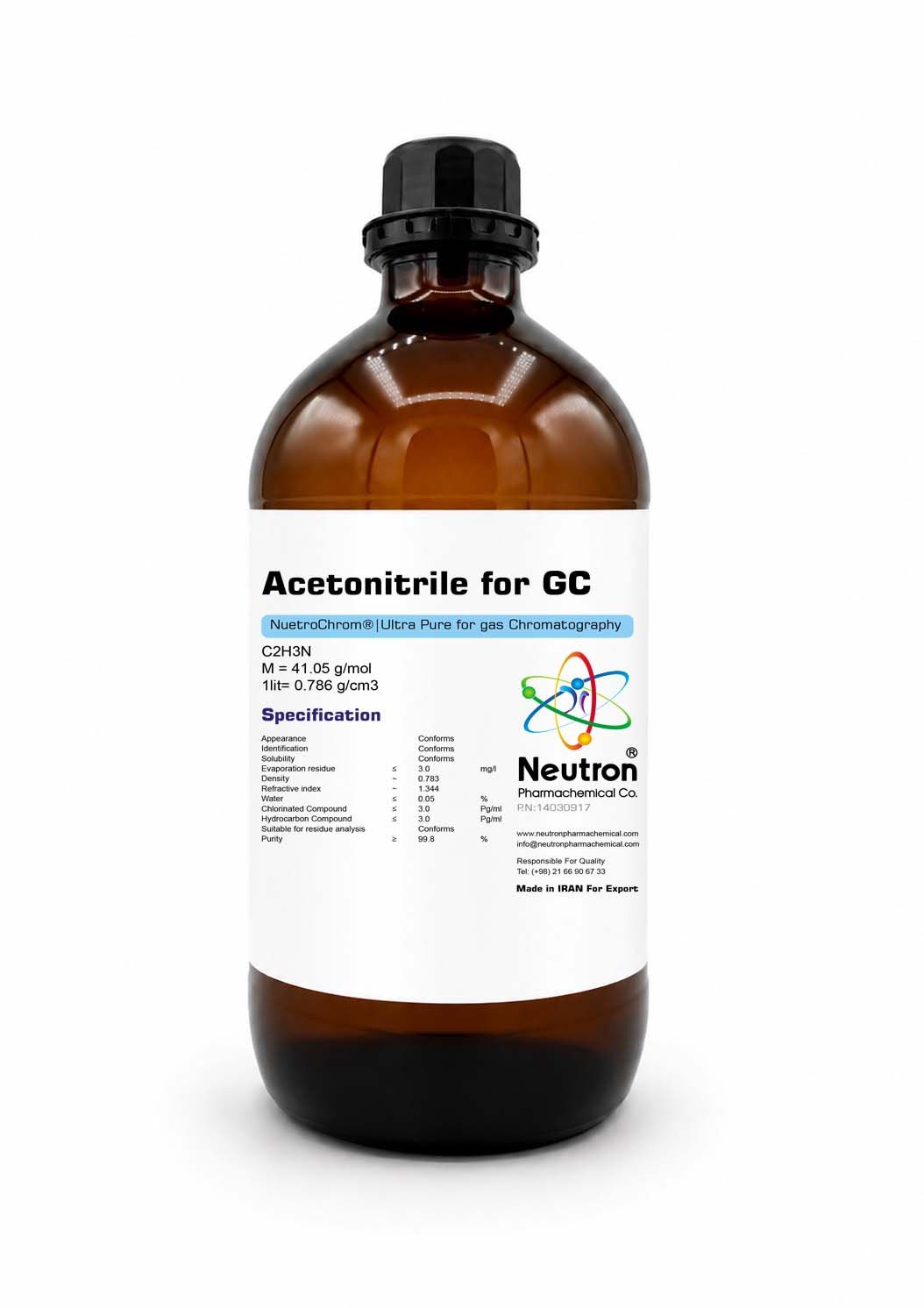
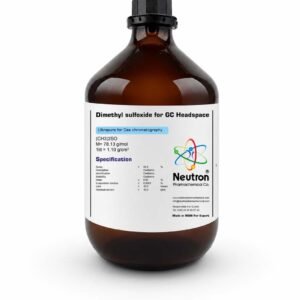
Acetonitrile for GC
| Formula | C2H3N |
| Chemical formula | C2H3N |
| Density | 0.786 g/cm3 (20°C) |
| Molar mass | 41.05 g/mol |
| EC index number | 608-001-00-3 |
| CAS number | 75-05-8 |
| HS Code | 29269095 |
| EC number | 200-835-2 |
| Storage | 5°C to +25°C |
| SDS | available |
| RTECS | AL77000000 |
| R phrase | R 11-20/21/22-36 |
| S phrase | S 16-36/37 |
| Odour | ether like |
| Form | liquid |
| Color | Colourless |
| Explosion limit | 3.0 – 17 vol % |
| Ignation temperature | 524°C |
| Solubility in water | Soluble (20°C) |
| Solubility in ethanol | miscible |
| Solubility in chloroform | miscible |
| Flash point | 2 °C |
| Boiling point | 81.6 °c (1013 hpa ) |
| Melting point | – 45.7 °C |
| Vapour pressure | 97 hpa (20°C) |
| Viscosity dynamical | 0.316 mpa*s (25°C) |
| Saturation concentration | 163 g/m3 (20°C) |
| Appearance | Conforms | ||
| Identification | Conforms | ||
| Solubility | Conforms | ||
| Evaporation residue | ≤ | 3 | mg/l |
| Density | ~ | 0.783 | |
| Refractive index | ~ | 1.344 | |
| Water | ≤ | 0.05 | % |
| Chlorinated Compound | ≤ | 3 | Pg/ml |
| Hydrocarbon Compound | ≤ | 3 | Pg/ml |
| Suitable for residue analysis | Conforms | ||
| Purity | ≥ | 99.8 | % |
Acetonitrile for GC is a high-purity, polar aprotic solvent specifically manufactured for gas chromatography applications. It is widely used as a solvent and analytical reagent in chemical, pharmaceutical, environmental, and research laboratories, where low water content, minimal impurities, and excellent chromatographic performance are essential for accurate and reproducible GC analysis.
🏭⚗️ Production
Produced primarily through the catalytic ammoxidation of propylene as a byproduct in acrylonitrile manufacturing, followed by advanced purification processes including multi-stage distillation, drying, and fine filtration to achieve GC-grade quality. Strict quality controls are implemented to minimize water content, residual acrylonitrile, non-volatile residues, and UV-absorbing impurities that may interfere with chromatographic detection. Each batch is tested for purity, boiling range, water content (Karl Fischer), residue on evaporation, and GC baseline stability. Supplied in airtight, moisture-free containers to preserve analytical integrity.
🔬 Properties
Clear, colorless liquid with a faint ether-like odor. Highly polar and completely miscible with water and most organic solvents. Low viscosity and relatively low boiling point, offering excellent volatility and sharp peak performance in GC analysis. Chemically stable under recommended storage conditions. Highly flammable and forms toxic vapors when heated or burned.
🧪 Applications
Commonly used as a GC solvent and sample diluent in analytical and quality control laboratories. Applied in pharmaceutical testing, environmental analysis, petrochemical analysis, and forensic laboratories. Frequently used in residue analysis and as a reaction medium in organic synthesis where GC-compatible purity and low background interference are required.
⚠️ Safety
For laboratory use only. Highly flammable liquid and vapor. Harmful if swallowed, inhaled, or absorbed through skin. Causes serious eye irritation and may cause respiratory discomfort. Handle in well-ventilated areas or under a fume hood. Wear appropriate personal protective equipment, including chemical-resistant gloves, lab coat, and safety goggles. Store tightly sealed in a cool, dry place away from heat, ignition sources, acids, and oxidizing agents. Dispose of according to local chemical waste regulations.